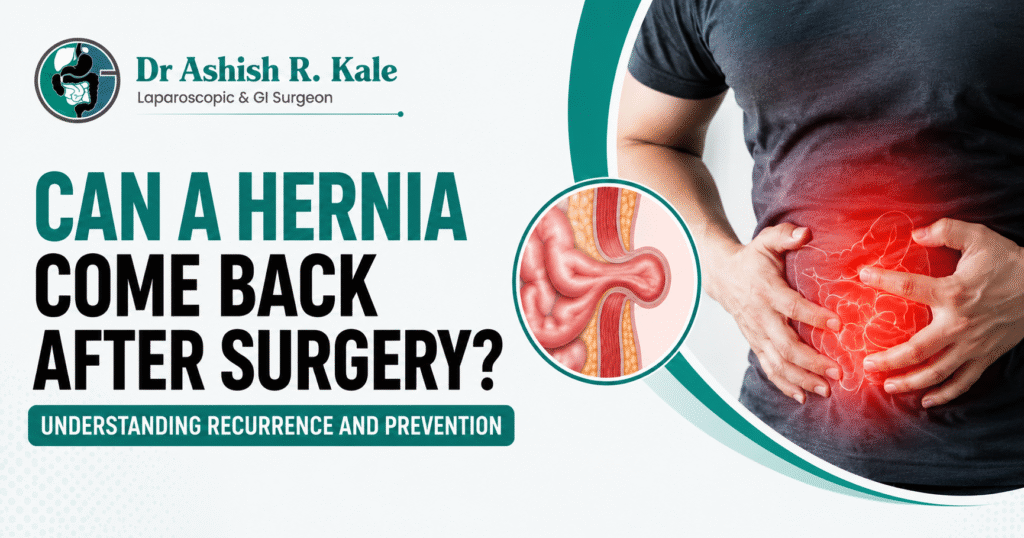
A hernia is a common condition that occurs when an internal organ or tissue pushes through a weak spot in the surrounding muscle or connective tissue. Hernia surgery is one of the most effective treatments, offering long term relief for most patients. However, one question many people ask after surgery is, “Can a hernia come back?”
The answer is yes, although modern surgical techniques have significantly reduced recurrence rates. If you are looking for the Best Laparoscopic Surgeon in Pune, choosing an experienced surgeon plays an important role in reducing the chances of recurrence and ensuring a smooth recovery. Understanding why hernias recur and how to prevent them can help you protect your health after surgery.
What Is a Recurrent Hernia?
A recurrent hernia occurs when a hernia develops again at or near the site of a previous surgical repair. Although hernia surgery has a high success rate, recurrence can happen months or even years after the original operation.
Advancements in laparoscopic surgery, improved mesh technology, and better postoperative care have helped lower recurrence rates compared to older surgical techniques.
According to the American College of Surgeons (ACS), recurrence rates vary depending on the type of hernia, the surgical method used, and individual patient factors.
How Common Is Hernia Recurrence?
The likelihood of recurrence depends on several factors, including the type of hernia and the repair technique used.
Research shows that:
-
Most modern hernia repairs have a relatively low recurrence rate.
-
Laparoscopic mesh repair generally offers lower recurrence rates for many patients when performed by experienced surgeons.
-
Larger or more complex hernias may carry a slightly higher risk of recurrence.
According to the International Guidelines for Groin Hernia Management, recurrence rates have decreased significantly with the use of mesh repairs and standardized surgical techniques.
Why Can a Hernia Come Back?
Although surgery repairs the weakened area, several factors may contribute to recurrence.
Common causes include:
-
Weak abdominal muscles.
-
Heavy lifting too soon after surgery.
-
Chronic coughing.
-
Obesity.
-
Smoking.
-
Poor wound healing.
-
Diabetes.
-
Constipation leading to excessive straining.
-
Infection after surgery.
-
Previous multiple hernia repairs.
In many cases, recurrence is not caused by the surgery itself but by ongoing pressure placed on the abdominal wall during recovery.
Signs That a Hernia May Have Returned
Recognizing the symptoms early allows prompt medical evaluation.
Watch for signs such as:
-
A new bulge near the previous surgical site.
-
Pain or discomfort during lifting or coughing.
-
Swelling that becomes more noticeable when standing.
-
A feeling of pressure or heaviness in the abdomen or groin.
-
Persistent discomfort after complete recovery.
If you notice any of these symptoms, consult a Best laparoscopic hernia surgeon for a thorough examination.
Does Laparoscopic Surgery Reduce Recurrence?
For many patients, laparoscopic hernia repair offers several advantages over traditional open surgery.
Benefits may include:
-
Smaller incisions.
-
Less postoperative pain.
-
Faster recovery.
-
Lower risk of wound complications.
-
Earlier return to daily activities.
-
Reduced recurrence in appropriately selected patients.
However, the success of laparoscopic surgery depends greatly on the surgeon’s expertise, the type of hernia, and patient related factors.
According to the Society of American Gastrointestinal and Endoscopic Surgeons (SAGES), laparoscopic repair is considered a safe and effective option for many types of hernias.
How Can You Reduce the Risk of Hernia Recurrence?
Following your surgeon’s postoperative instructions is one of the most effective ways to prevent recurrence.
Healthy Habits That Protect Your Hernia Repair
-
Avoid lifting heavy objects during the recovery period.
-
Maintain a healthy body weight.
-
Eat a balanced diet rich in protein to support healing.
-
Stay hydrated.
-
Prevent constipation by eating enough fiber.
-
Stop smoking.
-
Manage chronic cough if present.
-
Follow your surgeon’s activity recommendations.
Even after recovery, protecting your abdominal muscles remains important.
Recovery Tips After Hernia Surgery
Most patients recover well with proper care.
During recovery:
-
Walk regularly to improve circulation.
-
Avoid strenuous exercise until cleared by your surgeon.
-
Take medications exactly as prescribed.
-
Attend all follow up appointments.
-
Report unusual swelling, fever, or severe pain immediately.
Recovery times vary depending on whether you have open or laparoscopic surgery, as well as the complexity of the hernia repair.
When Should You Contact Your Surgeon?
While mild discomfort is expected during recovery, certain symptoms require immediate medical attention.
Seek medical advice if you experience:
-
Increasing swelling around the surgical site.
-
Severe or worsening pain.
-
Fever or chills.
-
Redness or drainage from the incision.
-
Persistent vomiting.
-
Difficulty passing urine or stool.
-
A new bulge near the repaired area.
Early evaluation allows problems to be addressed before they become more serious.
Choosing the Right Surgeon Matters
The experience of the operating surgeon is one of the most important factors influencing successful hernia repair.
An experienced Best laparoscopic hernia surgeon carefully evaluates:
-
The type of hernia.
-
Previous surgical history.
-
Overall health.
-
Body weight.
-
Lifestyle factors.
-
The most suitable repair technique.