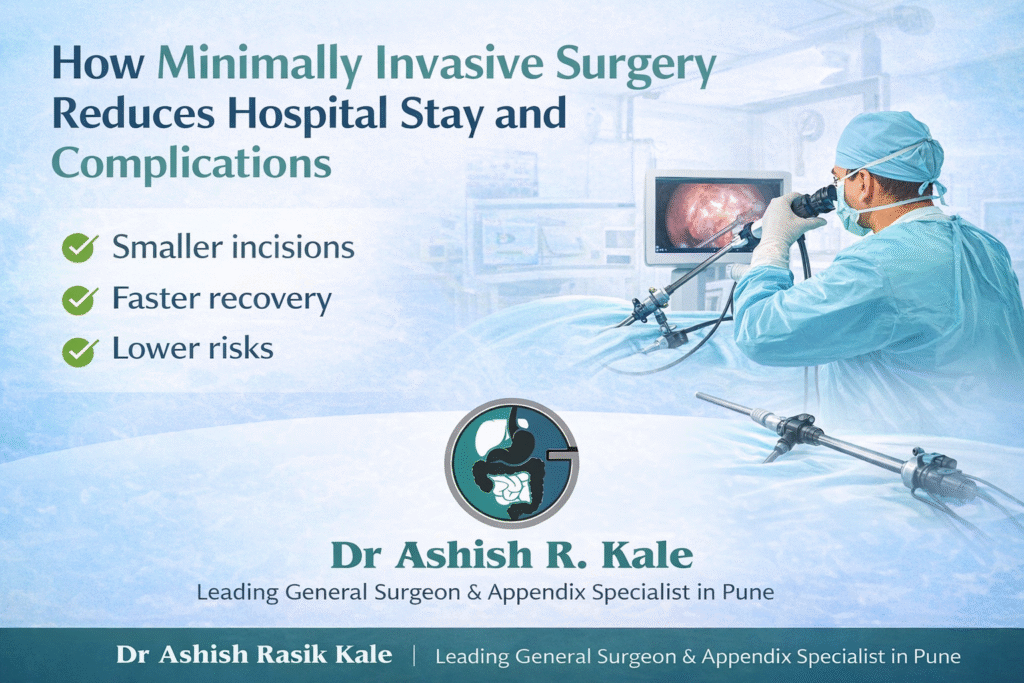
Advancements in medical science have transformed the way surgeries are performed today. Minimally invasive surgery, also known as laparoscopic or keyhole surgery, has become a preferred choice for many procedures, especially gastrointestinal and appendix-related surgeries. If you are looking for an Appendix Specialist in Pune, choosing minimally invasive techniques can ensure faster recovery and fewer complications.
What is Minimally Invasive Surgery?
Minimally invasive surgery involves performing procedures through small incisions using specialized instruments and a camera. This allows surgeons to operate with high precision while causing minimal damage to surrounding tissues.
How It Reduces Hospital Stay
1. Smaller Incisions, Faster Healing
Unlike traditional open surgery, minimally invasive procedures use tiny cuts. This results in quicker wound healing and allows patients to be discharged earlier.
2. Less Post-Operative Pain
Smaller incisions mean less trauma to the body, leading to reduced pain after surgery. Patients recover comfortably and require fewer pain medications.
3. Early Mobilization
Patients can start walking and resuming light activities sooner, which significantly reduces the need for prolonged hospital stays.
How It Reduces Complications
1. Lower Risk of Infection
Smaller wounds reduce exposure to external contaminants, lowering the chances of infection.
2. Minimal Blood Loss
Advanced surgical techniques ensure precise cutting, leading to less bleeding during the procedure.
3. Reduced Risk of Surgical Complications
Minimally invasive surgery decreases the risk of complications such as hernia, scarring, and delayed healing.
4. Better Surgical Accuracy
High-definition cameras provide a clear view of internal organs, enabling surgeons to perform procedures with greater precision.
Benefits for Appendix Surgery
Minimally invasive surgery is especially beneficial for appendix-related conditions. Patients undergoing laparoscopic appendectomy can experience:
- Shorter hospital stay
- Faster return to daily activities
- Minimal scarring
- Reduced risk of post-surgical complications
Meet Dr. Ashish Rasik Kale – Leading Appendix Specialist in Pune
Dr. Ashish Rasik Kale is a highly experienced General Surgeon and a trusted Appendix Specialist in Pune, with over 13 years of expertise in Gastrointestinal (GI) Surgery.
Qualifications:
- M.B.B.S. (2011)
- D.N.B. in General Surgery (2015)
- F.N.B. in Minimal Access Surgery (2017)
He is associated with reputed hospitals such as KEM Hospital, Sahyadri Group of Hospitals, and Jehangir Hospital. Dr. Kale specializes in both conventional and minimally invasive surgical techniques, ensuring safe and effective treatment for appendix and other GI conditions.
His patient-centric approach, combined with advanced surgical skills, makes him one of the most trusted surgeons for appendix treatment in Pune.
Who Should Consider Minimally Invasive Surgery?
You may benefit from minimally invasive surgery if you have:
- Appendicitis
- Gallbladder issues
- Hernia
- Other gastrointestinal conditions
Consulting an experienced specialist is essential to determine the most suitable treatment approach.
Conclusion
Minimally invasive surgery has revolutionized modern healthcare by offering safer procedures, shorter hospital stays, and quicker recovery. With reduced complications and better outcomes, it has become the preferred choice for many patients.
If you are seeking expert care, consult Dr. Ashish Rasik Kale, a leading Appendix Specialist in Pune, for advanced and reliable surgical treatment.